Why Do Cats Purr – and How Do They Do It?
· 6 min read
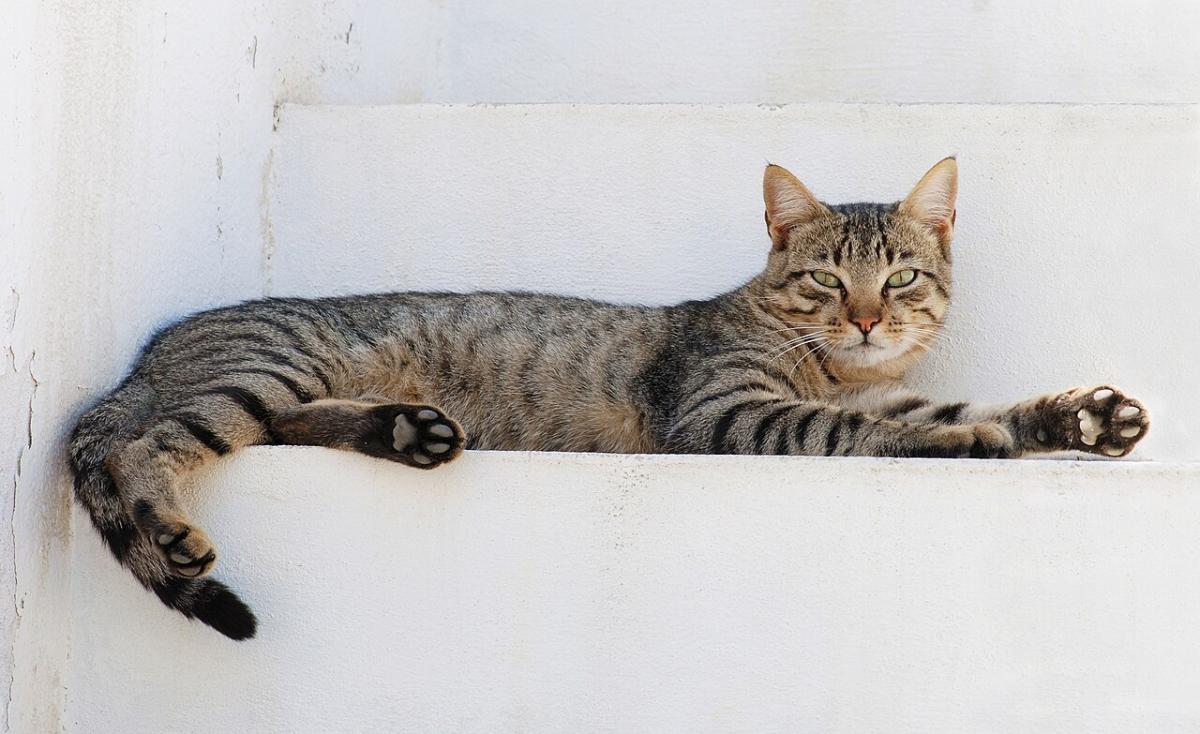
Cats purr to communicate and to soothe themselves: often because they are content, but also when they want something, when they are nursing kittens, and sometimes when they are stressed or in pain. The sound is made in the larynx, a low vibration of roughly 25 to 150 hertz that continues as the cat breathes in and out.
How do cats purr?
The purr is produced in the cat's voice box. For decades scientists believed it depended on a steady stream of nerve signals that made the laryngeal muscles twitch rapidly, but a 2023 study suggests the vocal folds themselves do much of the work.
The classic explanation, summarised by veterinary researcher Leslie Lyons, then at the University of California, Davis, is that purring comes from intermittent signals to the muscles of the larynx and the diaphragm. Unlike a meow, the purr carries on through both inhalation and exhalation, at a fairly consistent frequency between 25 and 150 hertz. That is why it sounds like one continuous rumble.
In 2023, a team led by voice scientist Christian Herbst at the University of Vienna tested this idea in the lab. They used larynges from eight domestic cats that had died of incurable illnesses. Without any nerve input or muscle activity, all eight larynges produced self-sustaining vibrations at typical purring frequencies of about 25 to 30 hertz when air was blown through them.
The researchers found an explanation in the tissue: pads of connective tissue up to 4 millimetres across, embedded in the cats' vocal folds. These extra masses appear to let the small larynx vibrate unusually slowly, in a way the team compared to the creaky "vocal fry" register of the human voice. The study does not completely rule out a role for muscle contractions, but it shows that a cat's larynx is built to purr almost by itself.
Does purring always mean a cat is happy?
No. Purring often signals contentment, but cats also purr in situations that are anything but relaxing.
You are most likely to hear it when a cat is being stroked, fed or curled up on a lap, and when a mother cat is nursing her kittens. But cats also purr at the vet, or when they are injured or recovering. Many researchers therefore see purring as a form of communication rather than simply a "happy noise", with a meaning that depends on the situation.
A few clues help you read it:
- Relaxed purring: soft body, half-closed eyes, slow blinking, kneading
- Asking purring: the cat follows you, stares at you or sits near the food bowl
- Stressed or pained purring: hiding, a hunched posture, flattened ears, not eating
What is the "solicitation purr"?
It is a special purr some cats use to ask their owners for food, with a cry-like sound hidden inside it. Researchers at the University of Sussex described it in 2009.
Karen McComb and her team had owners record their cats purring in two situations: while asking for food and while relaxing. Fifty people then listened to recordings from ten cats. Even listeners who had never owned a cat rated the food-related purrs as more urgent and less pleasant. The key was a high-pitched element, reminiscent of a meow or cry, embedded in the low purr. When the researchers removed that element from the recordings, the purrs were rated as significantly less urgent.
The team suggested the embedded cry may tap into the same sensitivity that makes people respond to a baby's cry. The behaviour seemed most common in cats that live one-to-one with their owner, while cats in busier households tended simply to meow. In McComb's view, solicitation purring is probably more acceptable to humans than overt meowing: cats "can sort of get away with solicitation that way rather than with just meowing, which might get them swept aside."
Can purring help a cat heal?
Possibly, but this remains an unproven idea. Some researchers have pointed out that vibrations in the purr's frequency range have been linked to bone density and tissue healing, which could explain why injured cats purr.
The hypothesis is appealing, and it is sometimes stated online as fact. In reality, nobody has shown that purring speeds up healing in cats. It is just as plausible that purring in sick or injured cats is mainly a way of calming themselves, or of signalling to others that they need care. If your cat is purring while also behaving unusually, treat the purr as no guarantee that all is well and have them checked by a vet.
Is a cat's purr good for people?
Many owners find it deeply calming, and there are hints that living with a cat may be good for the heart, but the evidence is limited. One US study that followed people over time found that those who had owned a cat in the past had a lower risk of dying from a heart attack.
That study, based on the second US National Health and Nutrition Examination Survey, reported a relative risk of 0.63 for death from heart attack among past cat owners compared with people who had never had a cat. Like most research in this field, it shows an association, not proof that cats or their purrs protect the heart. For a closer look at what the science can and cannot say, see our article on whether pets can lower your blood pressure.
Do lions and tigers purr?
Generally not in the continuous way a house cat does. Cheetahs, pumas, lynxes and most smaller wild cats purr, while the big roaring cats, lions, tigers, leopards and jaguars, are not known for a true purr.
The Smithsonian's National Zoo notes that cheetahs cannot roar but do purr, as well as chirp, hiss and growl. The usual explanation lies in the throat. In the four roaring cats, a small bone in the voice box is replaced by a stretchy ligament, and their vocal folds are large and fleshy, while other cats have a more rigid structure that suits purring. Even so, the 2023 Vienna findings show how much there still is to learn about feline voices.
What does this mean for you and your cat?
Listen to the purr, but read the whole cat. A purr on your lap with slow blinks is almost certainly a good sign. A purr from a cat that is hiding or has stopped eating is a reason to call the vet.
Purring is one of the small daily rituals that make life with a cat so particular. If you are still deciding whether a purring companion or a tail-wagging one would suit you better, our guide to choosing between a dog and a cat can help.
Frequently asked questions
- Can cats purr and meow at the same time?
- In a way, yes. The "solicitation purr" some cats use when asking for food contains a high-pitched, cry-like component layered on top of the low purr.
- Do all cats purr?
- Domestic cats purr, and so do most other members of the cat family. Among wild cats, cheetahs and most small species purr, while lions, tigers, leopards and jaguars roar instead.
- Why does my cat purr when I stroke it?
- Being stroked is one of the most common triggers for purring, and in a relaxed cat it usually goes along with comfort and contentment. Look at the rest of the body too: soft muscles and slow blinks are good signs.
- Should I worry if my cat purrs a lot while unwell?
- Purring does not rule out illness, because cats also purr when injured or stressed. If your cat is purring but hiding, not eating or acting unusually, contact your vet.
Sources
- Herbst et al. (2023): Domestic cat larynges can produce purring frequencies without neural input, Current Biology
- Scientific American: Why do cats purr? (answer by Leslie A. Lyons, UC Davis)
- McComb et al. (2009): The cry embedded within the purr, Current Biology
- University of Sussex (2009): press release on the solicitation purr study
- National Geographic (2009): Cats use "irresistible" purr-whine to get their way
- Qureshi et al. (2009): Cat ownership and the risk of fatal cardiovascular diseases, Journal of Vascular and Interventional Neurology
- Smithsonian's National Zoo: Why do cheetahs have spots? And other cheetah facts
- BBC Wildlife (Discover Wildlife): Why can only big cats roar and not purr?