Balto and Togo: The Sled Dogs of the 1925 Serum Run
· 5 min read
In the winter of 1925, about 20 mushers and more than 150 sled dogs relayed diphtheria antitoxin roughly 674 miles across Alaska to the town of Nome in about five and a half days. Balto led the team that brought the serum into town and became world-famous, but Togo and his musher Leonhard Seppala covered the longest and most dangerous part of the route.
What happened in Nome in 1925?
Diphtheria broke out in Nome, a remote mining town on Alaska's Bering Sea coast, and the town's supply of antitoxin had expired. With the sea frozen and the winter too cold for the small planes of the day, dog teams were the only practical way to bring in more.
Diphtheria is a serious bacterial infection, and in Nome children had begun to die. The town's only doctor quarantined the sick and radioed for help in January 1925. The official record lists five deaths and 29 cases, though the Associated Press noted on the run's 100th anniversary that the true toll was probably higher, because illness among Alaska Native residents wasn't accurately recorded.
How did the serum relay work?
Officials sent 300,000 units of antitoxin by train from Anchorage to the railway town of Nenana, where it arrived on 27 January. From there, dog teams passed the package from one to the next all the way to Nome.
The conditions were brutal. Temperatures at times dropped to around minus 60°F (minus 51°C), and teams fought deep snow and whiteouts. According to the Cleveland Museum of Natural History, the 20 teams covered the distance in a record 127 hours. Many of the mushers were Alaska Natives, whose names are much less well known than Balto's.
What did Togo do on the run?
Togo led Leonhard Seppala's team over more than 260 miles of the relay, far further than any other team. Their single leg carrying the serum, about 91 miles, was the longest stretch of the whole run.
Togo was 11 or 12 years old at the time (accounts differ), which is old for a working sled dog. Seppala's team set out from Nome to meet the serum and, on the way back, crossed the frozen Norton Sound. The American Kennel Club recounts that on the return journey the team was stranded on an ice floe and Togo pulled it back to safety. Most other teams ran legs averaging about 31 miles.
Why did Balto become the famous one?
Balto led the last team, driven by musher Gunnar Kaasen, which carried the serum the final 53 miles or so into Nome. The team arrived in the early hours of 2 February 1925, and Balto, running at the front, became the face of the whole relay.
Balto wasn't a star racer. The AP reported that he had been considered too slow for competitive racing and was used to haul freight. But the story of the dog who ran through a blizzard to save Nome's children spread quickly, and within months Balto had a statue. Seppala, for his part, resented that Kaasen and Balto received the credit for a run in which his own team had done the heaviest work.
Is the Balto statue in Central Park real?
Yes. A bronze statue of Balto by sculptor Frederick Roth stands in New York's Central Park near East 67th Street. It was unveiled on 17 December 1925, and Balto attended the ceremony himself.
Its plaque honours all the sled dogs of the relay, not just one, and ends with three words: "Endurance · Fidelity · Intelligence".
What happened to Balto and Togo afterwards?
Their later lives went very differently. Balto ended up on show in a Los Angeles "dime museum", while Togo retired comfortably to a kennel in Maine.
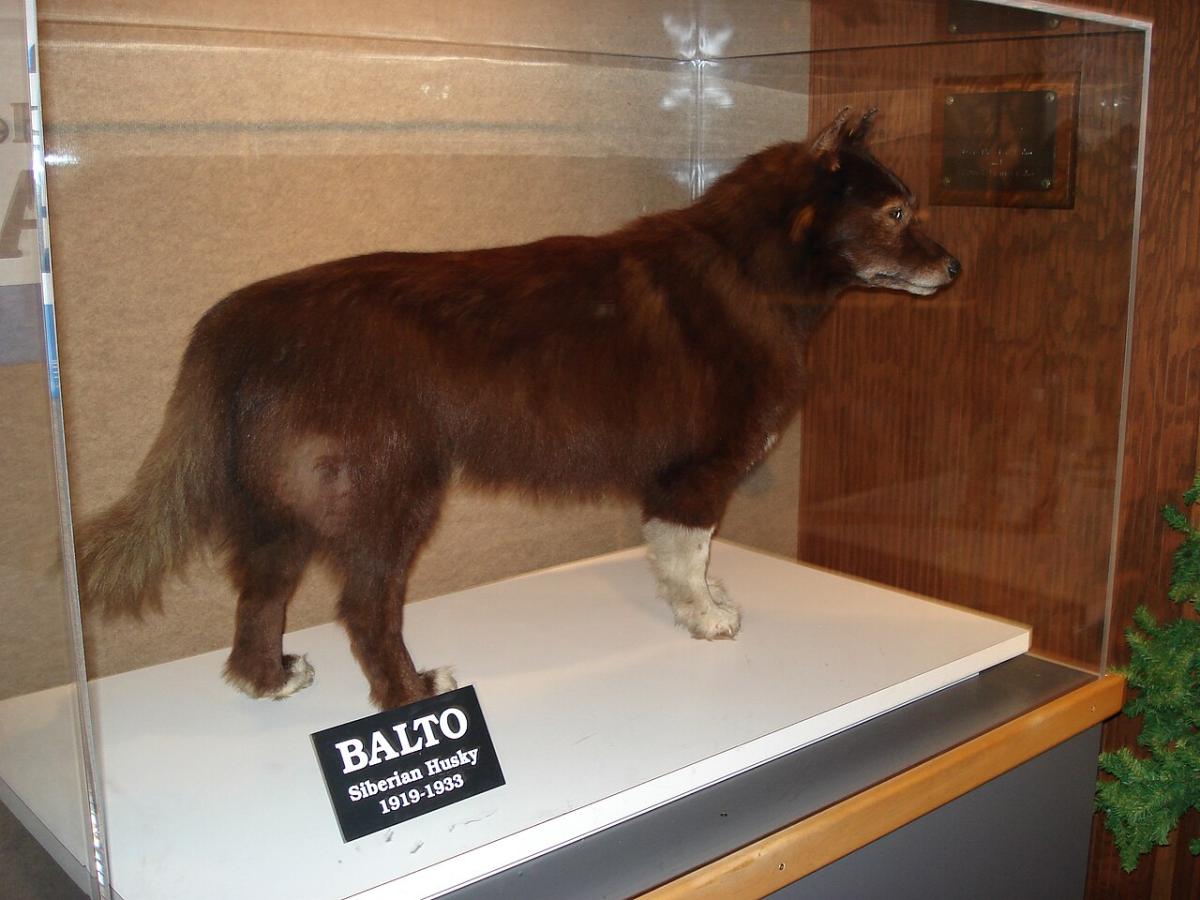
A Cleveland businessman, George Kimble, found Balto and six of his teammates there and arranged to buy them for $1,500. The city raised the money in about ten days, much of it donated in pennies. The dogs arrived in Cleveland on 19 March 1927 to a parade, and lived out their days at the Brookside Zoo. Balto died of natural causes in 1933.
Togo spent his retirement at the Siberian husky kennel Seppala ran with Elizabeth Ricker in Poland Spring, Maine. He was put to sleep in December 1929, at 16.
Where can you see Balto and Togo today?
Both dogs were preserved after death, and you can still visit them. Balto is on display at the Cleveland Museum of Natural History, and Togo's mounted body is at the Iditarod Trail Sled Dog Race headquarters in Wasilla, Alaska.
Togo's skeleton is held separately by Yale's Peabody Museum of Natural History. Togo's part in the story also reached a wider audience with Disney's 2019 film Togo, while Balto had already starred in a 1995 animated film loosely based on the events.
Is the Iditarod race held in memory of the serum run?
Not exactly, although that's a common belief. The Iditarod follows the historic Iditarod Trail, a supply route to Nome, and the AP notes that the race isn't based on the serum run, even though it shares part of the route and organisers marked the run's centenary in 2025.
Why do we still tell this story?
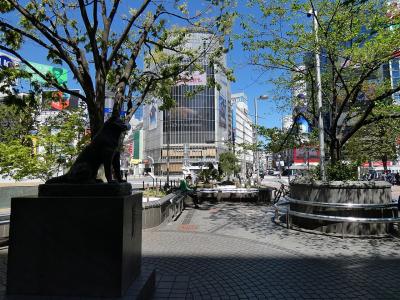
Because it's a story about trust between people and dogs, and about animals doing extraordinary work without knowing why. Like Hachikō waiting at Shibuya station, Balto and Togo have become symbols of loyalty that outlived them by a century.
It's also a reminder of how hard working dogs can be. Sled dogs are working athletes in a way most pet dogs aren't, but every dog benefits from regular exercise, as do their owners. Our look at whether dog owners really get more exercise covers what that means for an ordinary family dog.
Balto's statue was built because people wanted to remember a dog. That wish hasn't changed, even if most of us now remember our own dogs in quieter ways, with photos and stories shared with family, or an online memorial page.
Frequently asked questions
- Was Balto a real dog?
- Yes. Balto was a real sled dog who led Gunnar Kaasen's team on the final leg of the 1925 serum run to Nome, Alaska. Within the same year he had a bronze statue in New York's Central Park.
- Who was the real hero, Balto or Togo?
- Both dogs played a part, along with around 150 others. Togo's team covered far more distance and the most dangerous stretch, while Balto's team finished the relay and received most of the fame.
- Where are Balto and Togo now?
- Both dogs were preserved after they died. Balto is displayed at the Cleveland Museum of Natural History, and Togo's mount is at the Iditarod headquarters in Wasilla, Alaska, while his skeleton is at Yale's Peabody Museum.
- Did the serum run save Nome?
- The antitoxin reached Nome on 2 February 1925 and helped contain the outbreak. The official record lists five deaths, although the true toll was probably higher.
Sources
- Cleveland Museum of Natural History: 100 Years After the Great Serum Run, Balto's Legacy Endures (2025)
- National Park Service: Togo
- American Kennel Club: Togo, the Siberian Husky Sled Dog Hero of 1925
- Associated Press via KTLA: Mushers and dogs braved a horrific Alaska winter to deliver lifesaving serum 100 years ago (2025)
- Central Park Conservancy: Balto
- The Scientist: The Sled Dogs that Stopped an Outbreak
- Wikipedia: Statue of Balto
- Wikipedia: Balto