Hachikō: The True Story of Japan's Most Loyal Dog
· 5 min read
Hachikō was a real Akita dog who, after his owner Professor Hidesaburō Ueno died suddenly in May 1925, kept going to Tokyo's Shibuya Station to meet him for almost ten years, until his own death in March 1935. The core of the story is well documented, although films and retellings have added details that never happened.
Who was Hachikō?
Hachikō, originally just "Hachi", was an Akita born in November 1923 in Ōdate, in Japan's northern Akita Prefecture. In January 1924, at about 50 days old, he was sent to Tokyo to live with Hidesaburō Ueno.
Ueno was a professor in the Faculty of Agriculture at Tokyo Imperial University, today the University of Tokyo, and he helped found the field of agricultural civil engineering in Japan. He and Hachi lived near Shibuya Station, and the young dog would accompany him to the station and greet him there when he came home.
The "-kō" in Hachikō is an affectionate suffix in Japanese.
What happened to Professor Ueno?
On 21 May 1925, Ueno died suddenly of a cerebral haemorrhage, aged 53. Hachi had lived with him for only about 16 months.
That evening, and on the evenings that followed, the dog went to the station as usual. His master never came.
Did Hachikō really wait at Shibuya Station for ten years?
Yes, the daily visits are well attested. After Ueno's death Hachi was passed between several homes, including relatives in Asakusa, about 8 kilometres away, before the family of Ueno's former gardener took him in near Shibuya. Wherever he lived, he kept returning to the station.
According to accounts from the time, he waited outside the ticket gates morning and evening, in rain and snow, for nearly a decade. He became a familiar sight at the station, but he was not widely known until 1932, when Hirokichi Saitō, founder of a society for preserving native Japanese dog breeds, wrote about Hachi's loyalty in the forerunner of today's Asahi Shimbun newspaper. The story spread across Japan and abroad, and Hachikō became a national symbol of faithfulness.
Some people did feed him at the station. Whether he came out of devotion, out of habit or because the station had become his territory is something nobody can know. What is documented is that he kept coming back, year after year.
When was the Hachikō statue built?
The first bronze statue of Hachikō was unveiled outside Shibuya Station on 21 April 1934, and Hachikō himself attended the ceremony. Volunteers had raised the money for it.
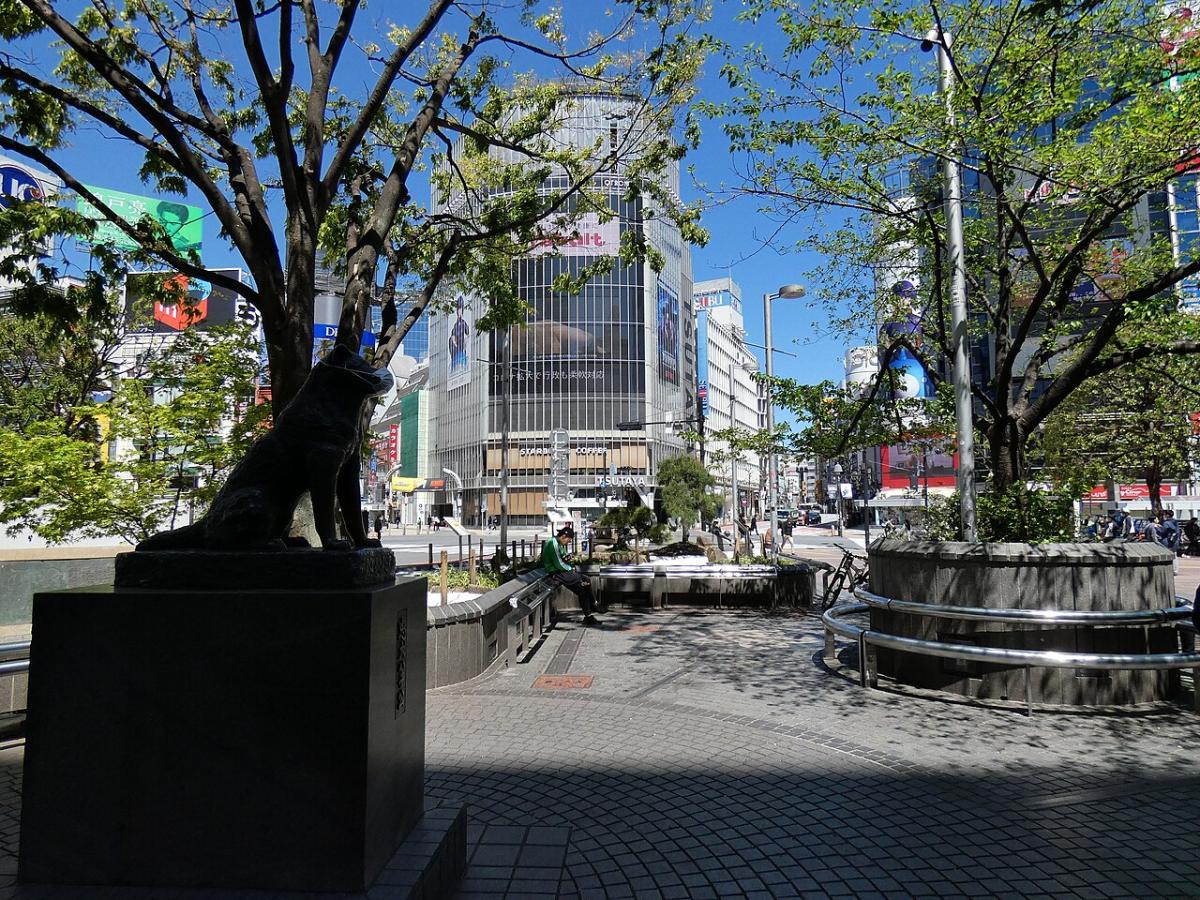
During the Second World War, the statue was removed and melted down for the war effort. A new statue was erected in August 1948 and still stands outside the station today. "Meet you at Hachikō" is one of Tokyo's best-known meeting arrangements, and the plaza around the statue bears his name.
How did Hachikō die?
Hachikō died in Shibuya on 8 March 1935, aged eleven. For decades a rumour claimed he had been killed by yakitori skewers that kind strangers had fed him.
In 2011, veterinarians at the University of Tokyo examined his preserved organs and settled the question: he had terminal cancer and a filarial worm infection, better known as heartworm. Four skewers were indeed found in his stomach, but they had not damaged it or caused his death. One of the researchers called the skewer theory "groundless".
Where can you visit Hachikō today?
You can follow his story across several places in Japan:
- Shibuya Station, Tokyo: the 1948 bronze statue on the plaza that bears his name
- National Museum of Nature and Science, Ueno Park, Tokyo: Hachikō's preserved pelt is on display
- Aoyama Cemetery, Tokyo: Hachikō was buried beside Professor Ueno's grave, where a stone for him still stands
- University of Tokyo, Yayoi Campus: since 8 March 2015, the 80th anniversary of his death, a statue by Tsutomu Ueda has shown the joyful reunion of a young Hachikō and his master; the university also keeps his internal organs there
- Ōdate, Akita Prefecture: his hometown, which opened an Akita Dog Visitor Center outside the station in 2019 and celebrated his 100th birthday in November 2023
How true are the Hachikō films?
The 1987 Japanese film Hachikō Monogatari and the 2009 American film Hachi: A Dog's Tale, starring Richard Gere and directed by Lasse Hallström, both brought the story to new audiences. The American version moves the story to the United States and changes many details, so it is best seen as a retelling.
When you read or watch retellings, a few points are worth keeping in mind:
- The skewer death is a myth, disproven by the 2011 examination.
- The waiting is documented as regular visits, morning and evening, over many years. Retellings that describe every single day without exception go beyond what anyone could have recorded.
- His birthday is usually given as 10 November 1923. His 100th birthday was celebrated in Japan on that date in 2023.
Why does Hachikō's story still move people?
Because almost everyone who has loved a dog recognises it. The routine of meeting someone at the door, the waiting, the habit that outlives the person: it is a picture of attachment that needs no translation. Even Helen Keller visited the statue in 1937 and was given an Akita puppy that same year.
For many grieving owners, Hachikō is also a mirror. The ache of reaching for a lead that is no longer needed, or expecting a familiar face at the window, is the human side of the same bond. If you are living with that feeling now, our guide to coping with the loss of a pet may help.
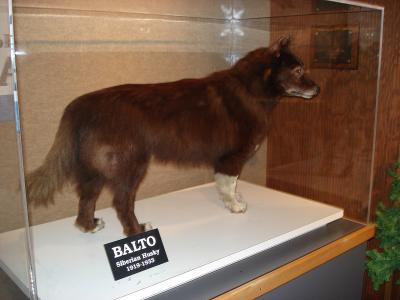
Hachikō is not the only dog whose loyalty became legend. The sled dogs Balto and Togo carried diphtheria serum to Nome, Alaska, in 1925, the very year Professor Ueno died. Each in their own way, these dogs remind us why their stories, and the stories of our own animals, are worth remembering.
Frequently asked questions
- Is the Hachikō story true?
- Yes. Professor Hidesaburō Ueno died in May 1925, and his Akita kept returning to Shibuya Station until his own death in March 1935. Some details in films and retellings are invented, but the core story is well documented.
- What breed was Hachikō?
- He was an Akita, a large Japanese breed from Akita Prefecture in northern Japan. He was born near the city of Ōdate in November 1923.
- Is Hachikō buried with his owner?
- Yes. Hachikō was laid to rest beside Professor Ueno's grave in Tokyo's Aoyama Cemetery, while his preserved pelt is displayed at the National Museum of Nature and Science.
- Is the film Hachi: A Dog's Tale accurate?
- Only in outline. The 2009 film moves the story to the United States and changes many details, so the 1987 Japanese film Hachikō Monogatari stays closer to the original setting.
Sources
- Nippon.com: Hachikō, the faithful dog
- Visit Akita / HACHI100: The story of Hachi (timeline)
- The University of Tokyo: Hachikō and Professor Ueno statue (UTokyo FOCUS)
- CBS News (2011): Legendary loyal dog's death mystery solved
- Volksstimme/dpa (2023): Japans berühmter Hund – vor 100 Jahren kam Hachiko zur Welt (in German)
- Japan National Tourism Organization: National Museum of Nature and Science
- National Park Service: Togo (1925 serum run)