The Rainbow Bridge: Meaning and Origin of the Poem
· 5 min read
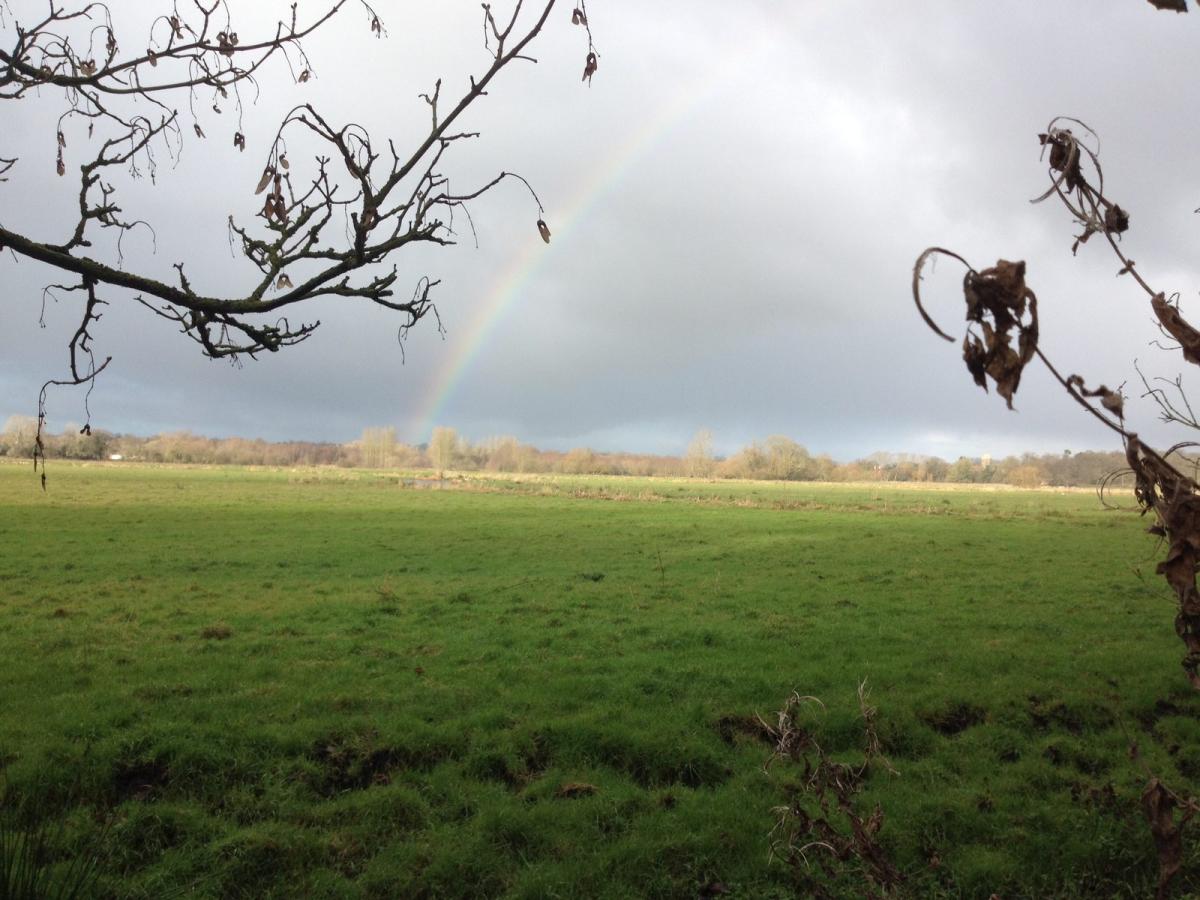
The Rainbow Bridge is a short prose poem about a green meadow "just this side of heaven" where pets who have died wait, healthy again, until their person arrives and the two cross a bridge into heaven together. After decades of anonymous circulation and competing claims, it is now credited to Edna Clyne, who wrote it in 1959 as a Scottish teenager grieving her dog; her authorship only became public in 2023.
What does the Rainbow Bridge poem say?
In a few short paragraphs, the poem describes a place where animals go when they die. They arrive restored to full health and free of injury. They play with other animals in the sunshine and have everything they need, yet each one misses the person it had to leave behind.
The heart of the piece is the ending. When that person dies in turn, their pet is there to greet them in the meadow. Owner and animal are reunited, and they cross the Rainbow Bridge together, never to be separated again. That image of reunion is what has made the text so widely shared at vets' surgeries, in sympathy cards and on social media for decades.
From the poem comes a gentle phrase many owners now use: when a pet has died, they say it has "crossed the Rainbow Bridge".
Who wrote the Rainbow Bridge poem?
Edna Clyne-Rekhy, a Scottish artist, is now recognised as the author. She wrote it in 1959 at the age of 19, the day after her Labrador Retriever, Major, died. In February 2023, National Geographic reported that the historian Paul Koudounaris had traced the text to her and her handwritten original; she was 82 at the time.
She was living near Inverness at the time. According to the National Geographic report, her mother suggested she write down her feelings, and the text came quickly. "It just came through my head, it was like I was talking to my dog," she later said. She never published it. She kept the handwritten original and made a few copies for friends, and from there it began to travel on its own.
Why was the author unknown for so long?
Because the poem spread anonymously for decades, and many people later claimed it. Its first known appearance online is a post on the newsgroup rec.pets.dogs dated 7 January 1993, which quoted a newsletter.
Some milestones in its strange history:
- February 1994: a reader sent the poem to the advice column Dear Abby, which printed it without a name and asked readers to help verify who wrote it.
- From 1995: according to National Geographic, 15 copyright claims were filed under the title.
- Competing stories: one claimant said the text had been told to him by a Native American shaman; the head of a pet-bereavement association believed it was a variation of his own poem.
- Other versions: later texts on the same theme, including a rhyming poem by different authors, also circulate as "Rainbow Bridge"; this article is about the original prose piece.
- 2023: the historian and author Paul Koudounaris, who kept meeting the poem while researching pet cemeteries, published the results of his search. He had worked through a list of about 25 possible authors, and a stray online mention of an "Edna Clyde" from Scotland led him to Clyne-Rekhy and her original manuscript.
Is the Rainbow Bridge linked to Norse mythology?
Only by resemblance. In Norse mythology, Bifröst is a rainbow bridge connecting the world of humans, Midgard, with Asgard, the home of the gods, but there is no evidence that it inspired the pet poem.
The idea of a heaven for animals is older than the poem, too. The author Margaret Marshall Saunders, for example, described an afterlife for animals in her 1902 book Beautiful Joe's Paradise, where animals arrive by balloon rather than over a bridge. By Clyne-Rekhy's own account, though, her text came from grief for one particular dog, not from mythology.
Why does the Rainbow Bridge comfort so many people?
Because it gives grief a picture: a pet no longer in pain, and a promise that the bond isn't over. Research on grief suggests that keeping a sense of connection with a lost animal can help many people, though not everyone.
Psychologists call this a "continuing bond". A systematic review in the journal OMEGA (Hughes and Lewis Harkin) found that continuing bonds with a pet who has died can sometimes intensify grief, particularly when others don't take that grief seriously. Finding the right kind of bond, though, could ease the intensity of grief and offer real support. An ethnographic study by Andrew Dean, published in 2022, looked at communities of pet owners who draw on the Rainbow Bridge and found the idea worked in three ways: as a temporary paradise for pets, as preparation for heaven, and as a way of easing human grief.
The poem also fills a gap. Many religious traditions say little about what happens to animals, and many owners aren't religious at all. The Rainbow Bridge asks for no doctrine. It simply says: they are well, and they are waiting. Stories of animals waiting for their people, like that of Hachikō, the Akita who kept returning to a Tokyo station for his owner, touch the same nerve.
What if the Rainbow Bridge doesn't feel right for you?
That's completely fine. Some people find the image too sentimental, too religious or simply not their own, and there is no right way to picture where a pet has gone.
Other ways people mark the loss include:
- writing a letter to their pet, or a short account of its life
- keeping its collar, a paw print or a favourite photo somewhere visible
- planting a tree or flowers in a place it loved
- creating a memorial page where family and friends can share memories (how a memorial page works)
If you are in the early days of grief, our guide on how to cope with the loss of a pet may help. Whether or not you believe in a meadow beyond the rainbow, the love the poem describes is real, and so is the grief that follows it.
Frequently asked questions
- Can I share the Rainbow Bridge poem on a memorial or in a card?
- Many people do, but the text has a known author, so it is courteous to credit Edna Clyne-Rekhy. For anything published or sold, check the copyright position first.
- Is the Rainbow Bridge a religious idea?
- Not in any formal sense. It doesn't belong to a particular faith, which is part of why people of many beliefs, and none, find it comforting.
- What can I say to a friend whose pet has crossed the Rainbow Bridge?
- Keep it simple and sincere: name the pet, say you are sorry, and share a memory if you have one. Acknowledging that the loss is real often matters more than finding perfect words.
- Was the Rainbow Bridge written for a dog or a cat?
- It was written after the death of a dog, a Labrador called Major. The text itself speaks of animals in general, so owners of every kind of pet use it.
Sources
- National Geographic: The ‘Rainbow Bridge’ poem has comforted millions of grieving pet owners. Now its author has been revealed (Rachel Nuwer, 22 February 2023)
- Mental Floss: The Story Behind the ‘Rainbow Bridge’ Poem
- Wikipedia: Rainbow Bridge (pets)
- Hughes & Lewis Harkin: The Impact of Continuing Bonds Between Pet Owners and Their Pets Following the Death of Their Pet: A Systematic Narrative Synthesis. OMEGA
- Dean (2022): The Rainbow Bridge: Imagining ‘Animal Heaven’. Journal for the Study of Religious Experience
- Wikipedia: Bifröst
- The Online Books Page: Marshall Saunders, Beautiful Joe's Paradise (1902)